
Farm Practical
Farm Practical Logbook Examples You Can Adapt Honestly
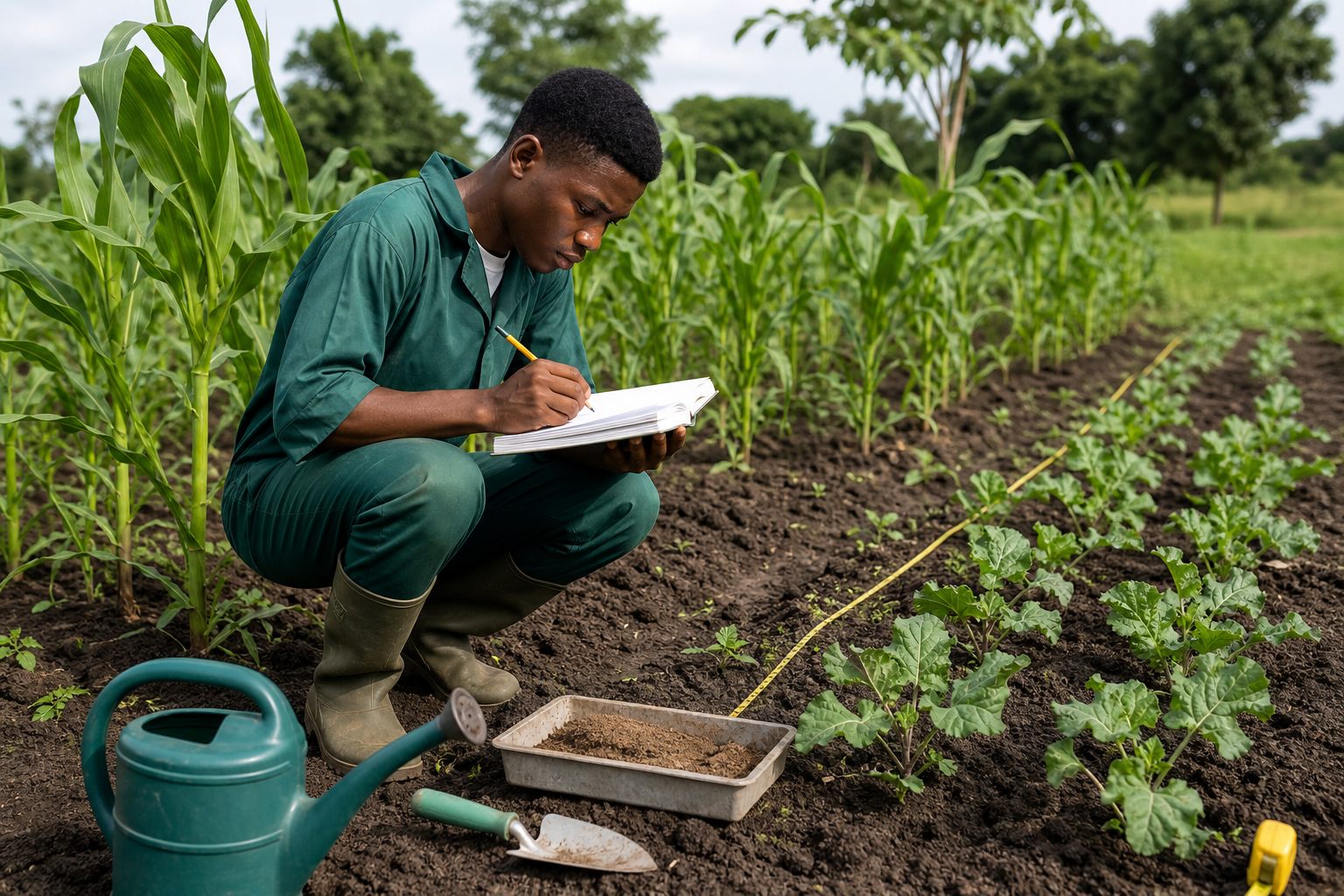
Farm entries become stronger when they include the crop or animal, tools, method, observation, measurement, safety step, and lesson.
The short answer
A farm practical entry should identify the activity, crop or animal involved, tools and materials, method, observation or result, safety precaution, and skill learned. Adapt examples only to work you truly performed or observed.
What makes a farm entry useful
Writing "we worked on the farm" does not tell your supervisor what happened. Agriculture is full of observable details. Mention the crop variety, plot condition, tool, measurement, treatment, animal, or result when you know it.
You do not need to force every detail into one sentence. Record the activity in a logical order and separate measurements clearly.
- Activity and location
- Crop, animal, soil, or material involved
- Tools and inputs used
- Method or procedure
- Measurement, observation, or result
- Safety or hygiene practice
- Skill or lesson gained
Example: nursery bed preparation
This kind of entry shows both the physical work and the reason behind it.
Sample entry
I assisted in preparing a raised nursery bed for tomato seedlings. The site was cleared with a hoe and rake, then the soil was loosened and mixed with well decomposed organic manure. The bed was levelled to support even water distribution, and shallow drills were made for sowing. I learned that a fine soil texture and proper drainage support uniform germination and reduce waterlogging.
Example: soil sampling
State where samples came from and how contamination was reduced. These details show that you understood the procedure.
Sample entry
I collected soil samples from different points across the vegetable plot using a soil auger. Surface debris was removed before sampling, and the samples were placed in clean labelled bags. The individual samples were combined to form a representative sample for analysis. I learned that sampling from several points gives a more reliable picture of the plot than collecting soil from one location.
Example: pest inspection and control
Avoid saying that a chemical was applied if you only observed the process. State your actual role and include protective measures.
Sample entry
I inspected okra plants for signs of insect damage. Chewed leaves and small holes were observed on several plants, and the affected section was shown to the farm supervisor. I assisted in removing heavily damaged leaves and clearing weeds that could shelter pests. The supervisor explained the approved treatment and the need to follow label instructions, dosage, protective equipment, and waiting periods before harvest.
Example: poultry house sanitation
Animal production entries should include hygiene, welfare, feed, water, or health observations where relevant.
Sample entry
I participated in cleaning the poultry house and washing the feeders and drinkers. Wet litter was removed and replaced with dry material to reduce odour and the risk of disease. Fresh water was supplied, and the birds were observed for unusual movement or feeding behaviour. I learned that regular sanitation and early observation are important parts of flock health management.
Example: harvesting and yield record
Measurements make an entry stronger when they are real. Never invent weights or quantities to make the work sound technical.
Sample entry
I assisted in harvesting mature pepper fruits from the demonstration plot. Damaged fruits were separated from marketable produce, and the harvested fruits were weighed in batches with a field scale. The weights were entered in the farm record before the produce was packed. I learned how harvest records help the farm compare yield across plots and production periods.
Use diagrams and measurements carefully
Useful farm diagrams include plot layouts, nursery beds, irrigation lines, animal housing, crop spacing, simple tools, and labelled plant parts. Keep labels readable and connect the drawing to the activity on the page.
Record only measurements you actually took or were given during the practical. Include the correct unit. If you estimated something, say that it was an estimate.
Adapt the structure, not the story
These examples are models for clarity. They are not entries to copy word for word. Your crop, weather, tools, procedure, and result may be different.
Start with your rough facts, then improve the order and language. That approach keeps your logbook useful when a supervisor asks you to explain the work later.
Questions students usually ask
Can I use the same farm entry for several days?
Only when the same activity genuinely continued, and even then record what changed each day. Mention new observations, measurements, stages, or responsibilities.
Should I include weather conditions?
Include weather when it affected the activity or result, such as irrigation, spraying, planting, harvesting, or soil work.
What if I only observed a farm procedure?
Say clearly that you observed it. Explain the steps, safety rules, and lesson without claiming that you performed the procedure yourself.
Organize your real weekly notes
LogFolio helps turn rough activities into a clearer draft. You check the facts and keep the final report honest.
Read next
SIWES Logbook
How to Fill a SIWES Logbook: Step-by-Step Guide and Examples
Filling a SIWES logbook is not about big grammar. It is about clearly recording what you did, how you did it, and what you learned.
SIWES Report
SIWES Report Format for Nigerian Students
Your school may provide its own template, but most SIWES reports follow the same clear movement from placement details to experience and recommendations.